Ibiza in winter: what to do, what's open and what to expect
Ibiza in winter is quiet, green and cheaper. From November to March highs are around 16-20°C and almost all beach hotels and clubs close, but Ibiza Town, Santa Eulalia and the inland villages stay alive. It's the season for walking, hearty stews and almond blossom.
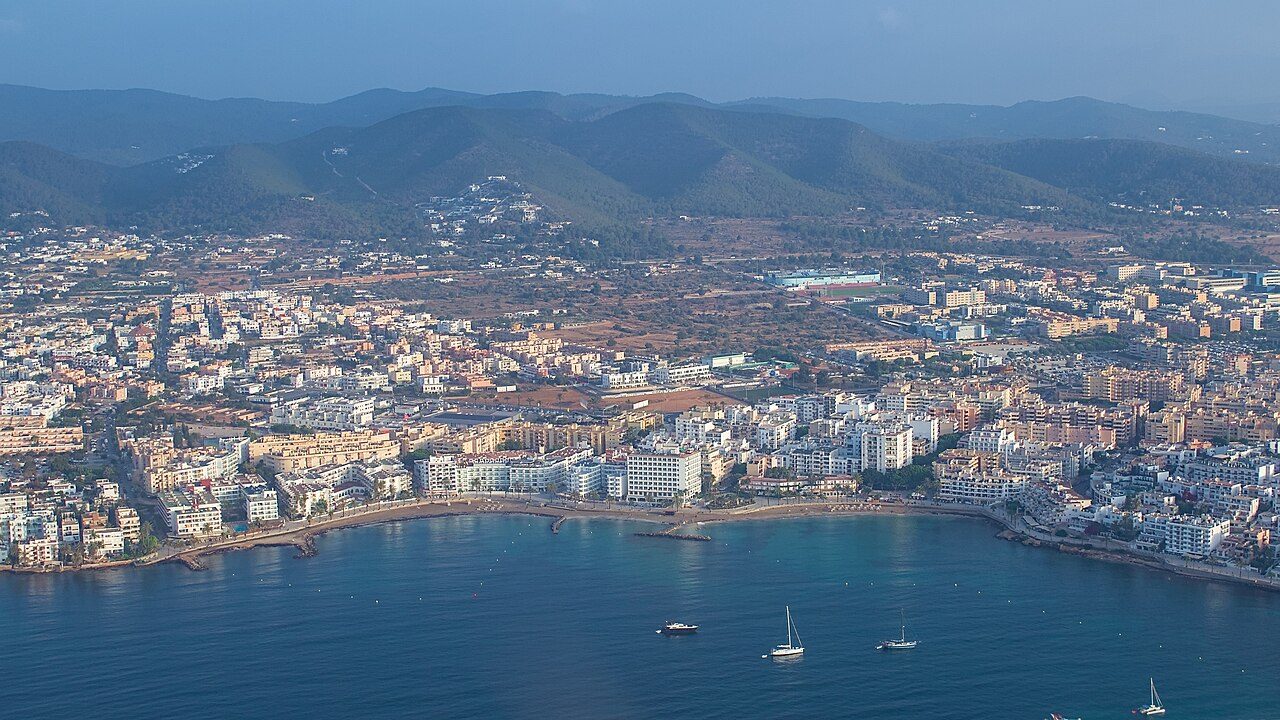
Photo: UnFUG-Fabi, CC0 1.0, Wikimedia Commons
There are two islands with the same name. One is July's, with queues at the coves, clubs every night and record prices. The other starts to peek out at the end of October, when the clubs close, the seasonal workers leave and the villages go back to the people who live in them. This guide is about the second: what the weather is really like, what's open, what's worth doing and what to know before you book.
If you're interested in going out at night, the detail is in Ibiza winter nightlife; if the rain worries you, in what to do in Ibiza when it rains; and if you're coming for the holidays, in Christmas and New Year's Eve in Ibiza.
What Ibiza is really like in winter (from someone who lives here)
The honest answer to "is it worth it?" is: it depends what you're coming for. If you want beaches with a buzz, beach bars and parties every day, no. If you fancy a Mediterranean island with gentle sunshine, empty roads, green countryside and restaurants where nobody rushes you, yes, very much so.
What surprises people most in January is the colour: after the autumn rains, the countryside turns green and smells of woodsmoke. And coves that have no room for a towel in August are empty.
There are also things you need to accept:
- Lots of shutters down. In the most touristy areas (San Antonio, Playa d'en Bossa, Es Canar, the Sant Josep coast) most hotels, bars and shops close. Walking through them in February feels a bit like a ghost town.
- Short days. In early December the sun sets around 17:30; in early March, around 18:45. Plan outings for the morning.
- Cold houses. Many homes and rentals are designed for the heat. With 9 or 10°C at night and high humidity, a house without heating really shows it. Always ask before booking.
- Less transport. There are fewer buses and fewer taxis, especially at night. To explore the island, a hire car (cheap at this time of year) transforms the trip.
- Changing hours. Many businesses close for odd weeks in January and February: don't trust the summer hours you see online.
In return, you see the Ibiza that doesn't make the photos: village fiestas, farmers' markets, long Sunday lunches and neighbours who finally have time to chat.
Ibiza weather from November to March
Ibiza has one of the mildest winters in Spain, but it isn't the Caribbean. These are the average values from AEMET's airport weather station (1981-2010 series):
| Month | Mean | Average high | Average low | Rainfall | Rainy days (≥ 1 mm) | Sunshine hours |
|---|---|---|---|---|---|---|
| November | 15.9°C | 19.6°C | 12.3°C | 53 mm | 5.6 | 157 |
| December | 13.1°C | 16.7°C | 9.5°C | 52 mm | 5.4 | 151 |
| January | 11.9°C | 15.7°C | 8.1°C | 37 mm | 4.9 | 162 |
| February | 12.1°C | 15.9°C | 8.3°C | 36 mm | 5.0 | 166 |
| March | 13.7°C | 17.7°C | 9.6°C | 27 mm | 3.3 | 211 |
How to read this table in practice:
- Rain is light and patchy, almost always in showers.
- The sun feels warmer than the thermometer says. At midday, out of the wind, you can eat outside in a T-shirt on many January days; when the sun goes down, it cools off fast.
- The wind is in charge. A tramontana day (north wind) feels much colder than the 15°C on your phone. Always carry a windproof layer.
- November is the wettest winter month and March the driest and brightest. Heavy autumn storms (known in Spain as DANA) can drop a lot of rain in a few hours: if one catches you, don't cross streams or flooded tracks.
And the sea? In midwinter the water is roughly 14-16°C: cold for a long swim, but not impossible for a quick dip on a sunny day. In fact, on 1 January some people take the year's first swim at Figueretes beach, in Ibiza Town.
What to pack: layers (T-shirt, light jumper and a windproof jacket), a light waterproof, shoes for walking on dirt and stone, sunglasses and, if you're staying in a country house, warm clothes for indoors.
What's open and what closes in Ibiza in winter
Hotels and accommodation
Most hotels close between late October and April. There's no official figure for hotels open in winter, but what's left is limited: the local press reported around thirty establishments open over Christmas 2025, mainly town hotels in Ibiza Town and inland agroturismos. Reopening is staggered from Easter onwards. There are also apartments, rural houses and long-stay rentals. In practice there's less choice, so over Spanish long weekends (Constitution Day in early December, Christmas, Carnival) it's worth booking ahead.
Restaurants, bars and shops
Almost all beach bars and many coastal restaurants close, and quite a few businesses use January and February for holidays or refurbishments. The ones that rely on residents stay open: those in Ibiza Town (the Marina, Vara de Rey, Figueretes), Santa Eulalia, Santa Gertrudis, Sant Joan, Sant Miquel and San Antonio town. Before driving half an hour for dinner, phone ahead. For a starting list, see the restaurants in Ibiza Town, Santa Gertrudis and Santa Eulalia.
Supermarkets, pharmacies, petrol stations and town shops run normally all year.
Buses, taxis and cars
From 1 November to 31 March the bus network runs on its winter timetable. The trunk routes between Ibiza Town, San Antonio, Santa Eulalia and Sant Josep keep going, along with the urban routes and the weekend night buses; almost all beach routes and the disco bus stop. The AERO2 serves the airport every half hour all year, while the AERO1 (San Antonio) and AERO4 (Santa Eulalia) drop to roughly every two hours. Exact frequencies change every year: check them on the operator's website or in our guide to Ibiza bus routes.
There are fewer taxis (some licences are seasonal), so at night in the villages you'll need to book. Hiring a car in winter costs a fraction of what it does in August, and there's no vehicle entry limit (that only applies in summer). We explain it in car and scooter hire in Ibiza.
Flights and ferries
The airport slows right down: in January 2026 it handled 199,053 passengers, against almost 1.1 million in May, and nine out of ten were on domestic flights. Around 17,000 arrived from abroad, mainly from the Netherlands, the UK, Germany and France: there are some direct routes, but only a few flights a week. If you can't find a direct flight on your dates, connecting in Madrid, Barcelona or Palma is the most practical option. Ferries to Formentera and mainland Spain (Barcelona, Valencia and Dénia) run all year with fewer sailings: check timetables in our guides to the ferry to Formentera and the ferry to Ibiza from mainland Spain.
Beaches
Beaches have no sunbeds, lifeguards or beach bars, and after a storm they pile up with dried posidonia seagrass (it protects the sand; it isn't dirt). For walking, they're wonderful. Each day, pick the coast sheltered from the wind: with a tramontana (north wind), the south; with a levante (east wind), the west. Our Ibiza beach guide helps you choose.
15 things to do in Ibiza in winter
- Walk up to Dalt Vila first thing, with the walled old town almost to yourself, then head down for breakfast in the Marina. The full route is in what to see in Ibiza Town.
- Watch the sunset facing Es Vedrà. In winter the sun sets to the south-west, closer to the islet, and the viewpoint is peaceful. Legends and viewpoints in our Es Vedrà guide.
- Go walking. It's the ideal hiking season: no heat, green countryside and empty paths. There are routes for every level in hiking trails in Ibiza.
- Explore Ses Salines Natural Park and look for birds on the salt pans (with luck, a group of flamingos). More in Ses Salines.
- Take a road trip around the inland villages: Santa Gertrudis, Sant Miquel, Sant Joan, Sant Carles and Santa Agnès, stopping at the white churches and old-school bars.
- Eat hearty food. Winter is the season for farmhouse stews, sofrit pagès, matanza rice dishes and fish soup. What to order, in traditional Ibiza food.
- Go to the Las Dalias market on a Saturday, open all year, and stay for lunch in Sant Carles.
- Head down to an empty cove on a calm day, such as Benirràs or Cala d'Hort, just for the walk.
- Visit the museums and archaeological sites: the Puig des Molins necropolis, the contemporary art museum (MACE) in Dalt Vila or the ethnographic museum in Santa Eulalia. Details and opening times in what to do when it rains.
- Spend a day in Formentera. No queues at Ses Illetes and the island in village mode. How to plan it, in Formentera day trip.
- Try hierbas ibicencas in a village bar after lunch. What the herbal liqueur is and which to buy, in Ibiza hierbas and wine.
- Go to a winter village fiesta: Sant Carles (4 November), Santa Gertrudis (16 November), Sant Antoni (17 January), Santa Agnès (21 January), Santa Eulària (12 February) or Sant Josep (19 March). In December, Sant Mateu holds the Festa des Vi Pagès, the farmhouse wine festival. Full calendar in Ibiza village festivals.
- Do yoga or visit a spa. Many centres keep running classes in winter. It's all in wellness in Ibiza.
- See Ibiza Town's Carnival, with the big parade in February (or early March, depending on the year) along the central avenues to Vara de Rey.
- Join a plan with people from the island: a walk, a meal, a game or an afternoon of board games. In the Ibiza Connects app you can suggest one or join those already posted.
Villages and markets in winter
In winter, life concentrates in four places, and it's worth knowing where to base yourself:
- Ibiza Town (Vila): the most open. There's a covered market, cinemas, a theatre, shops and restaurants all year, and in December it fills up with the Christmas programme.
- Santa Eulalia: a seafront promenade, open restaurants, Puig de Missa and a very village feel. We cover it in our Santa Eulalia guide.
- Santa Gertrudis and Sant Joan: the interior, with cafés, design shops and many foreign residents who live here all year.
- San Antonio town: the West End is shut, but the centre, the church and the promenade stay alive, and on 17 January it celebrates its patron saint, Sant Antoni Abat, with mass, a procession, the blessing of the animals and ball pagès. More in San Antonio.
As for markets, Punta Arabí closes in low season, but Las Dalias carries on on Saturdays (on shorter winter hours), along with several producers' and second-hand markets and, in December, the Christmas markets. Days and times in Ibiza hippy markets. To discover more villages, see Ibiza villages to visit.
Almond blossom (January and February)
Between late January and mid-February, depending on the year, the inland almond trees are covered in white and pink blossom. The most famous spot is the Pla de Corona, next to Santa Agnès in the north-west of the island, but you'll also see them in the valleys of Sant Mateu, Sant Miquel and Sant Joan.
Three tips to get it right: go midweek and in the morning, only park where you're not in the way (these are private farms and narrow lanes) and don't walk into the fields for photos. Flowering depends on each winter's cold and rain: one year it can come early in mid-January and another last into March. It's all in Ibiza's almond blossom.
Where to stay in Ibiza in winter
In summer the question is "which area do I like?". In winter it's "which area is still alive?". Our recommendation:
| If you want... | Best winter area | Why |
|---|---|---|
| To get around without a car | Ibiza Town | More buses, restaurants, cinema and life all year |
| Peace and quiet with amenities | Santa Eulalia | Open town, promenade and a good bus to Ibiza Town |
| Countryside, a fireplace and switching off | Inland (Santa Gertrudis, Sant Joan, Sant Miquel) | Agroturismos and rural houses; you need a car |
| A residents' atmosphere | Ibiza Town or Santa Gertrudis | It's where the people who live here stay |
| The lowest price | Ibiza Town and Santa Eulalia outside long weekends | More competition and more open |
Unless you have a good reason, avoid the summer-only areas (Playa d'en Bossa, San Antonio bay, Es Canar, Cala de Bou): lots closed and few options for walking out to dinner. If you fancy a finca in the countryside, see our guide to agroturismos in Ibiza and confirm they have heating and that the restaurant is open on your dates. To compare all areas, see where to stay in Ibiza.
Meeting people in Ibiza in winter
In winter the island is small: the people who stay are those who live here all year, Ibizans and residents of many nationalities, and you soon see the same faces. Ways into that circle:
- Clubs and activities: hiking groups, yoga classes, weekend beach sports, choirs, workshops or language exchanges.
- Village fiestas: open to everyone, and where you'll see the whole island.
- Plans in the app: on Ibiza Connects there are plans for meeting up, walks and ride sharing, with new people every week. If you're coming solo, read how to make friends in Ibiza.
If you're thinking of staying for a long spell, read living in Ibiza year-round first: winter is exactly the part the brochures leave out.
Ibiza prices in winter
Ibiza doesn't become cheap, but it does become reasonable:
- Accommodation: this is where you notice it most. A town hotel or apartment can cost less than half what it does in August, except at Christmas and New Year, when prices go back up.
- Hire cars: much cheaper, with plenty available.
- Flights from mainland Spain: usually cheap outside long weekends.
- Restaurants and supermarkets: change little. A set lunch menu (menú del día) at a village restaurant is still the cheapest way to eat out.
To run the numbers, see how much a trip to Ibiza costs. And if you're torn between winter and another time of year, the month-by-month comparison is in the best time to visit Ibiza. If you're coming in autumn, our blog covers what to expect from Ibiza in October.
Sources and official information
- AEMET · Climate normals, Ibiza Airport (1981-2010)
- Aena · Ibiza Airport closes January 2026 with 199,053 passengers
- Aena · Ibiza Airport closes May 2026 with 1,094,236 passengers
- Transport Públic d'Eivissa (Alsa) · All route timetables
- Ibiza's official tourism portal (Consell d'Eivissa)
- La Voz de Ibiza · Hotels open over Christmas 2025 (22-12-2025)
- Noudiari · Sant Antoni celebrates its big day with the blessing of the animals
Frequently asked questions
Is it worth going to Ibiza in winter?
Yes, if you're after peace, nature, good food and lower prices. From November to March there are plenty of sunny days, empty trails, villages with a life of their own and almond blossom. It's not worth it if you want beaches with services or clubs open every night: those come back between April and May.
What is the weather like in Ibiza in winter?
Mild. According to AEMET, average highs range from about 16°C in January and February to almost 20°C in November, with lows around 8-12°C. It rains about five days a month, usually in showers. The north wind makes it feel colder than the thermometer says.
Is everything closed in Ibiza in winter?
No. Most beach hotels, beach bars and clubs close, but Ibiza Town, Santa Eulalia and the inland villages stay open with restaurants, shops, markets and local life. The most touristy areas, such as Playa d'en Bossa or San Antonio bay, do become almost empty.
Can you swim in Ibiza in winter?
You can, but the water is cold: roughly 14 to 16°C in midwinter. A quick dip on a sunny, windless day is a great experience. There are no lifeguards on the beaches at this time of year, so stay close to shore and never swim alone in rough seas.
Are there direct flights to Ibiza in winter?
Yes, mainly from Spanish cities such as Madrid, Barcelona, Valencia or Palma. From abroad there are few routes and few flights: in January 2026, nine out of ten passengers were domestic, and international ones came mainly from the Netherlands and the UK. If there's no direct flight on your dates, connect via mainland Spain.
What is there to do in Ibiza in winter?
Hiking, road trips around the inland villages, sunsets facing Es Vedrà, Dalt Vila without the crowds, museums, markets like Las Dalias, hearty food, village fiestas, Carnival, almond blossom and a day in Formentera. In the Ibiza Connects app you'll also find plans with people from the island.