Formentera day trip from Ibiza: plan, beaches and getting around
A Formentera day trip from Ibiza works well: an early 30-minute ferry to la Savina, a bike or scooter hired at the port, the morning at ses Illetes, lunch and the afternoon at Migjorn or La Mola, and back at sunset. Without a car and without rushing, the island is about 20 kilometres end to end.
Formentera is half an hour from Ibiza and feels like another country: flatter, whiter, less built-up and with a pace that rubs off on you as soon as you step off the boat. Lots of people visit on a day trip and come back feeling they ran out of time. With this plan you won't: a timetable, getting around the island, beaches, villages and what not to do.
Formentera day trip: the plan, hour by hour
This plan is for someone leaving from Ibiza Town who wants to see the essentials without rushing. It works from May to October; for winter, see the last section.
| Time | What to do | Tip |
|---|---|---|
| 8:30 - 9:00 | Ferry from Ibiza port | The earlier you leave, the more crowd-free beach time you'll get |
| 9:30 | Hire a bike, e-bike or scooter at la Savina | The shops are right at the port; in August, book the day before |
| 10:00 - 13:00 | Ses Illetes and a walk to the tip of es Trucadors | The island's most famous water, best in the morning |
| 13:30 | Lunch at ses Illetes, in Sant Francesc or es Pujols | The ses Illetes beach restaurants need booking |
| 15:00 | Sant Francesc: the square, the church and a browse round the shops | The prettiest village by day |
| 16:00 - 18:30 | Platja de Migjorn or es Caló | Long sand in the south or rock pools in the north |
| 19:00 - 20:00 | La Mola lighthouse or sunset at Cap de Barbaria | By scooter or car; the last stretch to Barbaria is on foot. By bike, better to stay at ses Illetes |
| 20:30 - 21:30 | Return the vehicle and catch the ferry back | Check your company's last boat before you buy |
If you're cycling, cut it down: ses Illetes, Sant Francesc and Migjorn or es Pujols already make a full day. The climb to La Mola is long and steep; on an e-bike it's doable.
If you're not hiring anything, the bus takes you from the port to ses Illetes, es Pujols, Sant Francesc, La Mola or Cala Saona, depending on the route. Pick two places, not five.
To choose a ferry company and check prices and return times, read the Ibiza to Formentera ferry first. And if you'd rather see it from the sea, anchored off ses Illetes on a catamaran or private boat, the options are in Ibiza boat trips.
Getting around Formentera
Formentera is about 20 kilometres from end to end, between the La Mola plateau to the east and Cap de Barbaria to the south. It covers 83 km² and has just over 11,600 residents (INE, 2025). Almost all of it is flat, and the main road, the PM-820, crosses it from la Savina to La Mola.
| Transport | Who it suits | Pros | Cons |
|---|---|---|---|
| Bike | A relaxed trip, reasonably fit | Waymarked green routes, no parking, free on some ferry offers | Midday heat and the La Mola hill |
| E-bike | Almost everyone | You reach La Mola without collapsing | Pricier than a normal bike; watch the battery |
| Scooter or moped | Anyone wanting to see it all in a day | Quick, parks anywhere | Lots of scooters in August; licence needed |
| Bus | No licence or no wish to drive | Cheap and reaches the main beaches | Seasonal frequencies; not very flexible |
| Car | Families with small children or longer stays | Comfort and shade | Vehicle limit and regulated parking in summer |
| Taxi | Specific journeys | Door to door | Few taxis in August |
Formentera's buses
They're run by Autocares Paya, which publishes timetables at busformentera.com. The 2026 routes were:
- L1: la Savina port - es Pujols.
- L2: port - El Pilar de la Mola, crossing the island.
- L3: tourist bus to ses Illetes, with a yellow route (ses Illetes) and a blue one (ses Illetes and es Pujols).
- L5: to Cala Saona.
- L7: es Pujols - ses Illetes.
Frequencies change with the season and are in the PDF timetables on the website. Download them before you cross.
Scooters and cars: what to know
- To hire a 125 cc scooter on a Spanish car licence (category B) you need to have held it for at least three years; for a 50 cc moped the B licence is enough. With a foreign licence, ask in the shop.
- From 1 June to 30 September, Formentera limits the vehicles on the island (Law 7/2019). The island's hire cars already have their authorisation; if you bring your own from Ibiza, you apply at formentera.eco and pay per day. The 2026 platform has closed and reopens on 20 April 2027.
- Helmets are compulsory on scooters and mopeds, and in summer there are traffic and breathalyser checks as on any Spanish road.
Formentera beaches: ses Illetes, Llevant and Migjorn
Ses Illetes
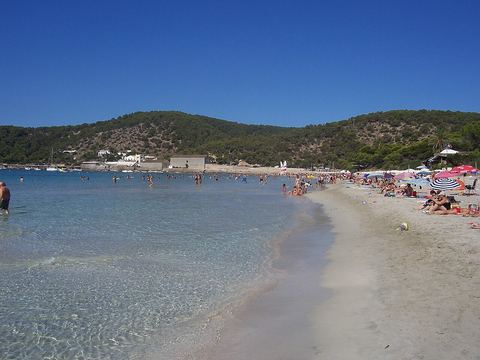
The beach you came for. It's at the northern tip, on the es Trucadors peninsula, and is part of the Ses Salines Natural Park of Ibiza and Formentera. It faces west, the water is calm and shallow, and the sand is dazzlingly white. It stretches over 450 metres, split in two by a rocky section, and takes its name from the islets opposite. There are boardwalks to protect the dunes: use them.
Do you have to pay to get in? On foot and by bike, no. By car or scooter, access to the park area is regulated and paid in season; the fee changes by month and type of vehicle and is published each season, so check formentera.es before you go. That's why so many people arrive by bike or on the L3 bus.
Llevant
On the other side of the same strip of sand, facing east. Wilder, with fewer facilities and, when the westerly wind blows, calmer than ses Illetes. Walking along the tip of es Trucadors you can cross from one to the other and look straight across to the islet of s'Espalmador.
Platja de Migjorn
The big beach in the south: several kilometres of sand between es Ca Marí and es Arenals, with stretches that are almost empty even in summer and beach bars dotted along it. Ideal for the afternoon if the wind is blowing in the north.
More coves for the day
- Cala Saona: the most photogenic cove in the west, with reddish cliffs and a sunset view. The L5 bus gets there.
- Es Pujols: the beach of the island's main resort, handy if you're going by bus.
- Es Caló de Sant Agustí: a fishing harbour with wooden boat huts and rocks to swim from, at the foot of La Mola.
More on the natural park, its lagoons and its Ibiza side in Ses Salines Natural Park.
Villages and lighthouses
Sant Francesc de Formentera. The capital. A square with a fortified church, white streets, design and craft shops, the market and terraces for a coffee. It's small: in an hour you've seen it at leisure.
Sant Ferran de ses Roques. The hippies' village in the 1960s and 70s, with its square and church. A good place for a drink before heading east.
Es Pujols. The most touristy spot, with a seafront promenade, restaurants and the island's nightlife, which is low-key compared with Ibiza.
El Pilar de la Mola. The village on the plateau, at the highest part of the island (La Mola rises to 192 metres). From May to October it has a craft market on Wednesday and Sunday afternoons, with live music: if it falls on your day, it's worth the stop.
La Mola lighthouse. At the eastern tip, on a dizzying cliff. It was built between 1859 and 1861 and its light sits about 142 metres above the sea. Since 2019 it has been a cultural space open to visitors, run by the Consell de Formentera. Next to it is a small monument to Jules Verne, who featured Formentera in one of his novels.
Cap de Barbaria. The southern cape, arid and almost lunar, with its lighthouse, the des Garroveret defence tower and the cave that opens in the cliff. It's Formentera's most sought-after sunset. To protect it, the Consell closes the last stretch of road to motor vehicles from a barrier with a car park, from 15 May to 15 October (the calendar approved for 2026); from there you continue on foot or by bike. People with reduced mobility can drive through.
Where to eat in Formentera
Eating in Formentera costs more than in an Ibiza village, especially right on the beach. Three approaches:
- A beach bar or restaurant at ses Illetes or Migjorn: the full experience, with fish or rice facing the water. In summer, book days ahead and expect high prices.
- In a village: in Sant Francesc, Sant Ferran or es Pujols there are bars and restaurants with set menus and tapas at more reasonable prices.
- A picnic: shop at a supermarket in la Savina or Sant Francesc and eat in the shade. Respect the park: no rubbish on the sand.
If you want to try something local, look for ensalada payesa with peix sec (sun-dried fish, very typical of Formentera) or a flaó for pudding. We cover them in traditional Ibiza food.
Formentera in winter
From November to March Formentera is a different island: almost no tourists, many restaurants and hotels closed and beautiful light. For a day cycling, walking on La Mola or seeing ses Illetes empty, it's wonderful.
What changes:
- Ferries: they still run every day, though fewer, and some are cancelled in storms.
- Hire: fewer shops are open, but there's usually one at the port; book ahead.
- Buses: winter timetables, less often.
- Eating: mainly village restaurants stay open. Check which ones before you go.
- Swimming: the sea is around 15-16 °C (59-61 °F) in midwinter, according to the Consell de Formentera. For the brave.
More low-season ideas in Ibiza in winter.
Common mistakes
- Trying to see everything by bike in August. At midday, at 32 °C (90 °F), the La Mola hill is not a plan.
- Catching the eleven o'clock ferry. You'll reach ses Illetes when there's no space left on the sand.
- Not booking a scooter in August. The port shops run out of vehicles first thing.
- Forgetting water, sun cream and shade. There are no trees at ses Illetes or Llevant. No pharmacy nearby either: bring the basics from Ibiza, as we explain in pharmacies in Ibiza.
- Missing the last boat. Each company has its own return times and a return ticket only works with the same company.
- Driving to ses Illetes. You pay to get in, hunt for parking and take longer than by bike.
If you're going as a group, organising the trip with more people makes the scooter, boat or beach lunch cheaper. You can create a plan in the app and anyone who wants can join.
Sources and official information
- Formentera.es (Consell de Formentera) · The island and how to get there
- Formentera.es · Ses Illetes beach
- Formentera.eco · Vehicle authorisation in season
- Bus Formentera (Autocares Paya) · Routes and timetables 2026
- Ports de Balears · Port of la Savina
- Wikipedia · La Mola lighthouse
- Wikipedia · Formentera (INE 2025 population, settlements)
- Noudiari · Formentera keeps access controls at Cap de Barbaria and es Caló des Mort in 2026
- Spain.info (Turespaña) · Craft markets: El Pilar de la Mola
Frequently asked questions
Is a day trip to Formentera from Ibiza worth it?
Yes, if you leave early. In a day you have time to see ses Illetes, Sant Francesc and a southern beach or La Mola, with a ferry of about 30 minutes and hire at the port. To get to know the island properly you need two or three days, but the day trip is one of the highlights of a holiday in Ibiza.
How do you get around Formentera?
The most practical option is to hire a bike, e-bike or scooter at la Savina port as soon as you get off the ferry. There are also Autocares Paya buses to ses Illetes, es Pujols, Sant Francesc, La Mola and Cala Saona. A car is the least useful option in summer, because of the vehicle limit.
What is the best beach in Formentera?
Ses Illetes is the most famous: white sand, turquoise water and shallow depths, in the north of the island. When the westerly wind blows, neighbouring Llevant is calmer, and in the afternoon the long Migjorn beach in the south is the most spacious. Cala Saona is the loveliest at sunset.
Do you have to pay to get into ses Illetes?
On foot and by bike, no. By car or scooter, access to the ses Illetes natural park area is regulated and paid in season, with fees published every season on formentera.es. That's why many visitors cycle from la Savina or take the L3 tourist bus.
Can you visit Formentera in winter?
Yes. The ferries run every day of the year, though with fewer sailings, and there's usually bike or scooter hire at the port. Many restaurants close from November to March and the buses run on winter timetables, but the empty island, with its light, is perfect for walking and cycling.
How much does a day in Formentera cost?
It depends on transport and where you eat. Add up the return ferry, which on a fast boat in summer usually costs over €50, bike or scooter hire and food, which is expensive right on the beach. With a picnic and a bike, the day costs much less than with a beach restaurant and a scooter.