Where to stay in Ibiza: the right area for your trip
Where to stay in Ibiza depends on your plans: Ibiza Town if you won't have a car and want a bit of everything; Playa d'en Bossa for the clubs; San Antonio for sunsets and a young crowd; Santa Eulalia and the east coast for families and calm; the north and west to switch off, always with a car.
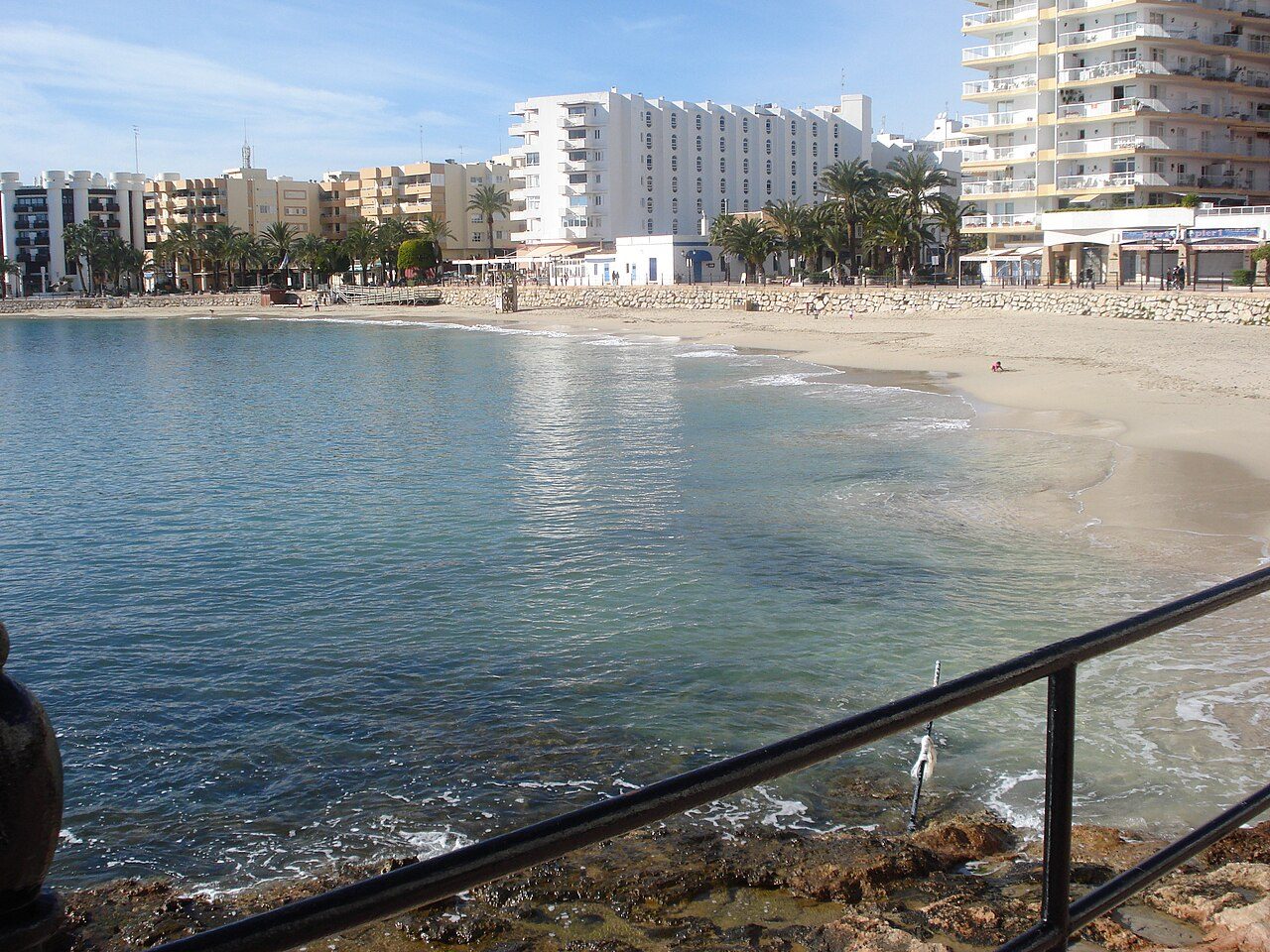
Photo: Saoro, Dominio público, Wikimedia Commons
On the map Ibiza looks tiny and everything seems close, until you spend forty minutes getting off a roundabout in August. That's why the area you choose shapes your trip more than the hotel itself. Here they are one by one, with the mistakes we see every summer.
Where to stay in Ibiza: the areas at a glance
Ibiza has five municipalities (Eivissa, Sant Josep de sa Talaia, Sant Antoni de Portmany, Santa Eulària des Riu and Sant Joan de Labritja), but when it comes to sleeping it's better to think in areas. The price column compares areas with each other.
| Area | Best for | Nightlife | Beach on foot | Without a car | Relative price |
|---|---|---|---|---|---|
| Ibiza Town, Marina and Figueretes | First-timers, couples, non-drivers | Lots: bars, the port and clubs 10-15 min away | Town beaches (Figueretes, Talamanca) | Very good | High |
| Playa d'en Bossa | Groups and club fans | Huge, by day too | Long and sandy | Good | High |
| San Antonio and the bay | Younger crowd, sunsets, mid budget | Lots in the West End, quiet in Cala de Bou | Coves nearby and boats to others | Good | Medium |
| Santa Eulalia and the east coast | Families, quiet couples, older travellers | Little, and early | Family-friendly coves | OK | Medium |
| North: Portinatx, Sant Joan, Sant Miquel | Rest, nature, clear water | Almost none | Small coves | Hard | Medium-high |
| West and south: Cala Tarida, Cala Vedella, Sant Josep, Ses Salines | Sunsets, villas, couples | Little, except beach clubs | Coves | Hard | High |
| Inland: Santa Gertrudis, Sant Rafel, Sant Llorenç, Sant Carles | Agroturismos and switching off | None | No | Very hard | High |
Ibiza Town: the Marina, Figueretes and Talamanca
It's the most complete base and the least car-dependent. You've got Dalt Vila, the walled old town listed as a UNESCO World Heritage Site, the Marina quarter with its shops and terraces, the port where the Formentera boats leave and most of the island's bus routes on your doorstep. The airport is about 15 minutes away.
Within town there are very different neighbourhoods:
- The Marina and the port: the real centre, lively until late. Pretty and practical, but in summer there's noise from terraces and people heading home from nights out. Ideal if you're doing a day trip to Formentera, as the boat leaves a few minutes' walk away.
- Figueretes: a beach neighbourhood south of the centre, with a promenade and apartments. Usually a little cheaper than the Marina and halfway to Playa d'en Bossa. Since 2026 the AERO5 bus links it with Playa d'en Bossa and the airport, from 15 May to 15 October.
- Talamanca and Marina Botafoch: across the harbour, quieter, with a calm-water bay and upmarket hotels. It's a 25-30 minute walk along the promenade into the centre.
The downside: parking is expensive and difficult. For what to see, read our guide to Dalt Vila, the Marina and the port, and for food, restaurants in Ibiza Town.
Playa d'en Bossa
It's the longest beach on the island, almost three kilometres of sand just south of town, and the hub of club culture: the big open-air names and the clubs that open into the early hours are here or a few minutes away. There are hotels at every level, many with pools and music from midday. It suits you if you're here to go out and want to walk home; not if you want an early night: there's music until late, traffic at night and, along much of the beach, planes coming in to land every few minutes. If you're staying here, our clubs guide and restaurants in Playa d'en Bossa will come in handy.
San Antonio and the bay of Portmany
Sant Antoni de Portmany (San Antonio, or San An to many British visitors) is really two towns in one. On one side, the West End, the bar streets that made it famous, where alcohol sales now have restricted hours and drinking in the street gets you fined (we sum it up in Ibiza rules for tourists). On the other, the bay: the promenade, the harbour, the sunset strip towards Caló des Moro and coves close by such as Cala Gració or Cala Salada.
Its big advantage is transport: in season the T1 to Ibiza Town runs every 15 minutes Monday to Saturday, the AERO1 goes straight to the airport and boats cross the bay to Cala Bassa and Cala Comte (routes and times in our guide to Ibiza bus routes).
Within the bay, Cala de Bou and Port des Torrent (which actually belong to Sant Josep) are quieter and more family-oriented, with the West End a short boat ride or drive away. More ideas in our guides to San Antonio and sunset spots.
Santa Eulalia, Es Canar and the east coast
Santa Eulària des Riu (Santa Eulalia) is the choice for people who want everything to work without fuss: a long seafront promenade, a marina, good shops, restaurants for every budget and quiet nights. It's popular above all with families and repeat visitors.
Along the east coast there are smaller resorts with their own character:
- Cala Llonga: a sandy bay with shallow water, very easy with small children.
- S'Argamassa, Cala Pada and Cala Nova: large hotels, some of them luxury, and clear-water coves.
- Es Canar: family hotels and the well-known Wednesday hippy market in season (days and times in our hippy markets guide).
- Es Figueral and Aigües Blanques: further north, more natural and with less on offer.
The party scene is elsewhere: Ibiza Town is about 20 minutes by car and Playa d'en Bossa a bit more. To get to know the town, see what to do in Santa Eulalia and its restaurants.
The north: Portinatx, Sant Joan and Sant Miquel
The north is the Ibiza of pine trees, terraced fields and small coves with crystal-clear water: Benirràs, Cala Xarraca, Port de Sant Miquel or the beaches of Portinatx.
The trade-off is that everything is far: from the airport to Portinatx takes about 45 minutes in normal traffic. There's a bus between Ibiza and Portinatx (the T6, which went up to 22 departures a day in summer 2026; far fewer in winter), but to get between coves you need a car or scooter.
The west and south: Cala Tarida, Cala Vedella, Sant Josep and Ses Salines
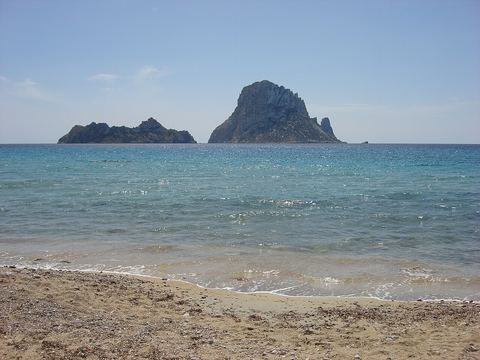
The west is the sunset coast: Cala Comte, Cala Tarida, Cala Vedella or Cala d'Hort, facing the islet of Es Vedrà. There are lots of villas in the hills and a few hotels and apartment complexes in the coves. The south, around Sant Jordi and Ses Salines Natural Park, has long sandy beaches and beach clubs, and is very close to the airport.
It's beautiful, but the bus only reaches some coves a few times a day and a car is all but essential. If it appeals, also see our guides to Es Vedrà and restaurants in Cala Tarida.
Inland: Santa Gertrudis, Sant Rafel and the country villages
There's no beach in the middle of the island, but there's something more and more people are after: restored fincas, agroturismos and silence at night. Santa Gertrudis de Fruitera has a square with very good restaurants, and from the centre of the island almost everything is 20-25 minutes' drive away, which makes it a balanced base if you'll be moving around a lot. Without a car, it makes no sense. More in agroturismos in Ibiza.
Where to stay by type of trip
For couples
For a romantic break with good restaurants and evening strolls, Dalt Vila and Talamanca work very well. If you're after sunsets and calm, try the west (Cala Vedella, Cala Tarida) or an inland agroturismo. For a luxury trip, see our area-by-area guide to luxury and boutique hotels.
For families
Santa Eulalia, Cala Llonga, Es Canar and Cala de Bou: gently sloping beaches, hotels with kids' pools and quiet nights. Avoid Playa d'en Bossa and the West End in July and August. More ideas in Ibiza with kids.
For nightlife
Playa d'en Bossa if you're into the clubs; San Antonio if you prefer bars, sunset terraces and a younger vibe; Ibiza Town if you want to combine dinners, the port and clubs. How a night out works is explained in our nightlife guide.
For peace and quiet
The north (Sant Joan, Portinatx, Sant Miquel), the interior and some of the western coves. Within the livelier areas, Talamanca and Cala de Bou are the calmest corners.
Without a car
Ibiza Town is the best base: buses leave from there to almost the whole island, plus boats to Formentera. San Antonio, Playa d'en Bossa and Santa Eulalia come next. We go into detail in getting around Ibiza without a car and getting from the airport to your hotel. If one day you fancy a far-off cove, you can look for a shared ride in the app.
In your 40s and beyond
To enjoy the odd night out without living in a club: Ibiza Town (dinners, Dalt Vila and clubs 10 minutes away) or Santa Eulalia, with a taxi to the party when you feel like it.
On a budget
Figueretes, San Antonio and some hostels in Sant Jordi tend to be the most affordable. More tips in Ibiza on a budget.
How much a night in Ibiza costs and when to book
In summer, a night in Ibiza costs more than almost anywhere else in Spain. Ibestat (the Balearic statistics office) calculates what's paid per room sold each month, and in August 2026 hotels in Ibiza and Formentera averaged about €286 a night: around €564 at five-star level, €253 at four-star and €245 at three-star, so there's barely any gap between three and four stars. Outside July and August, prices drop a lot.
A few pointers:
- July and August: book months ahead; it's when everything goes up most.
- May, June, September and early October: the best balance of price, weather and atmosphere. The month-by-month comparison is in the best time to visit Ibiza.
- November to April: many coastal hotels close. Ibiza Town and Santa Eulalia keep more open. Read our guide to Ibiza in winter first.
- Tourist tax: the sustainable tourism tax is paid separately per person per night (under-16s are exempt) and often isn't included in the price you see when booking. How much it is, in our guide to the Ibiza tourist tax.
To budget the whole trip (flights, food, transport), see how much a trip to Ibiza costs.
Common mistakes when choosing an area
- Staying far out without a car. A beautiful villa in the north without a car is a gilded cage. And in summer there's a cap on vehicles entering the island and hire cars sell out: read car and scooter hire in Ibiza before booking.
- Thinking in kilometres rather than minutes. Twenty kilometres can be twenty minutes in May or an hour in August leaving a beach or a club.
- Booking "sea views" without looking at the map. Some hotels with stunning views sit next to an open-air club or under the flight path. Check the exact address and read recent reviews about noise.
- Renting a holiday flat in an apartment block. In Ibiza, holiday lets in blocks of flats aren't allowed. How to check a rental is legal is explained in our guide to villas and holiday rentals.
- Forgetting opening dates. Many hotels open from May to October. If you're travelling in April or November, confirm that your hotel and the local restaurants are open.
Sources and official information
- Consell d'Eivissa · Register of tourist businesses and establishments
- Ibestat · Hotel profitability indicators
- Alsa Ibiza · Bus routes and timetables (Consell concession)
- Ibiza.travel · The island's official tourism portal
- Periódico de Ibiza · Bus frequencies from May 2026
Frequently asked questions
What is the best area to stay in Ibiza?
For a first visit, Ibiza Town: it's well served by buses and has Dalt Vila, restaurants, the port for Formentera and the clubs a few minutes away. For calm, Santa Eulalia or the north; for nightlife, Playa d'en Bossa or San Antonio. The best area really depends on whether you'll have a car.
Where should I stay in Ibiza without a car?
In Ibiza Town, the hub of the bus network and the port. San Antonio, Playa d'en Bossa and Santa Eulalia also work, with frequent routes in season and buses to the airport. Avoid the north, the west and the interior: buses there are few and far between, and taxis are slow to arrive in summer.
Which area of Ibiza is best for families?
Santa Eulalia and its coast (Cala Llonga, Es Canar, Cala Pada) and Cala de Bou, in San Antonio bay. They have gently sloping sandy beaches, family hotels with pools and quiet nights. It's best to avoid Playa d'en Bossa and the West End in July and August because of the night-time noise.
Where to stay in Ibiza for nightlife?
In Playa d'en Bossa if you're going to the big clubs, as several are there or a few minutes away. In San Antonio if you prefer bars, sunsets and a young crowd. Ibiza Town is the middle ground: the port, dinners and clubs nearby, with more chance to rest between nights out.
What is the quietest area of Ibiza?
The north of the island, around Sant Joan de Labritja, Portinatx and Sant Miquel, and the inland countryside around Santa Gertrudis or Sant Llorenç. Some western coves are quiet too. For calm without giving up amenities, Santa Eulalia and Talamanca are the most comfortable choices.
Where can I stay cheaply in Ibiza?
Figueretes, San Antonio and some hostels in Sant Jordi, near the airport, usually have the island's lowest prices. But what cuts costs most is the date: outside July and August the same room costs considerably less. Always add the tourist tax, paid separately, and book early: the cheap options go first.
Is San Antonio or Playa d'en Bossa better?
It depends on your plans. Playa d'en Bossa is for people coming for the big clubs who want a long sandy beach. San Antonio wins on sunsets, nearby coves and little boats to other beaches, and its hotels are often a bit cheaper, with a more bar-based night. To sleep well in San Antonio, pick the bay and avoid the West End.