Ibiza with a dog: beaches, rules and vets
Dog-friendly Ibiza starts with two beaches open to dogs all year: Es Viver and Ses Figueres, in Ibiza Town. On the town's other beaches dogs are banned from Easter to 31 October, and in other municipalities almost all beaches are off-limits in season. The ferry is the easiest way to arrive, and there are vets all over the island.

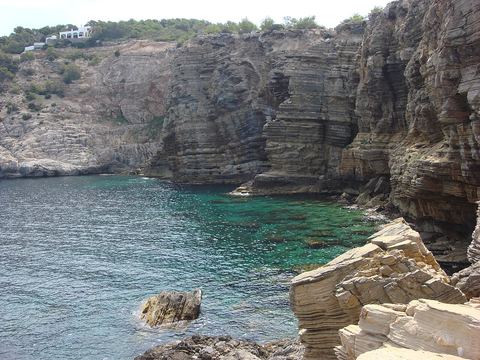
Photo: Florent Pecassou, CC BY-SA 4.0, Wikimedia Commons
Coming to Ibiza with a dog is perfectly possible and more and more people do it, especially outside July and August. But the island isn't particularly easy for dogs in summer: it's very hot, almost every beach bans them in season and there are hazards people from northern Europe don't know about, such as processionary caterpillars and grass seeds. This guide covers how to get here, where your dog can swim, which rules to follow and what to do if they fall ill.
Dog beaches in Ibiza: where and in which months
Let's start with the question people ask most, and the one that leads to the most fines. Each town council has its own bylaw, and the general rule in Ibiza is simple: in season, almost every beach bans dogs. There are only a few areas set aside for them.
| Area | Municipality | When | What it's like |
|---|---|---|---|
| Platja des Viver | Eivissa (Ibiza Town) | All year | About 360 metres of shoreline in the Es Viver neighbourhood, between Carrer Quartó de Balançat and Carrer Quartó de Santa Eulària des Riu, signposted. Dogs and swimming allowed |
| Ses Figueres | Eivissa (Ibiza Town) | All year | A stretch of coast from Carrer Benirràs to the municipal boundary, in the Talamanca area, signposted |
| Es Faralló | Santa Eulària des Riu | Not confirmed on the council website | Several guides mention a small area, about 20 metres, next to Puig de s'Església Vella, on rock. Check the signs before going |
| Ibiza Town's other beaches | Eivissa | Weekdays only, from 1 November to Easter | Banned at weekends and on public holidays, and from the start of Easter to 31 October |
Outside Ibiza Town, each municipality (Santa Eulària, Sant Antoni, Sant Josep and Sant Joan) regulates access in its own bylaw, and usually in season dogs can't go on the sand; some allow access in winter or provide specific areas. As these change from year to year, check the town council's website or the beach signs before going, and if you don't see a sign allowing it, assume it isn't allowed.
Fines are high. Eivissa town council warns of penalties of €751 to €3,000 for breaking the beach or animal ownership bylaws. And in summer, civic wardens and local police patrol. We also cover this in Ibiza rules for tourists.
Rules within dog areas: keep your dog under control on the way, always pick up after them, carry their documents, don't bother other beach users and, if it's a breed classed as potentially dangerous, use a muzzle.
For the island's other beaches, with facilities and access, see our Ibiza beach guide.
Getting there with a pet (plane and ferry)
Documents
Within the European Union, your dog needs a microchip, an in-date rabies vaccination and an EU pet passport. Even if you're coming from mainland Spain, bring the vaccination record or passport anyway: you may be asked for it on the boat, at your accommodation or if there's a problem in the street.
From Great Britain, for every trip you need an official health certificate (the Animal Health Certificate) issued by your vet, valid for entry into the EU within the following 10 days, plus a microchip and a rabies vaccination given at least 21 days beforehand. According to GOV.UK, if you live in England, Scotland or Wales you can't travel on an EU pet passport even if it was issued in an EU country; Northern Ireland residents can use one. Check the current requirements on GOV.UK before booking.
By plane
Each airline has its own rules, but this is typical:
- In the cabin: small dogs in a soft carrier under the seat, with a maximum weight usually around 8 or 10 kg including the carrier.
- In the hold: larger dogs, in an approved crate. Some airlines don't accept this in summer because of the heat, or for flat-faced breeds.
- Limited places: there's a maximum number of animals per flight. Book it when you buy your ticket, not afterwards.
By ferry
For a medium or large dog, the boat is usually the most comfortable option, especially if you're bringing your car. The ferry companies linking mainland Spain with Ibiza have different options depending on the ship: pet-friendly cabins, kennels or carrier areas and, on short crossings, the option of leaving the dog in the car or in a designated area. In common areas dogs must be on a lead and often muzzled. The animal's place is booked with your ticket and there are usually few, so get in early.
Bear in mind that in summer a car down in the hold gets very hot: always ask where your dog will be during the crossing. If you're going to Formentera, dogs are allowed on that boat too. Everything on routes and ferry companies is in the ferry to Ibiza from Barcelona, Valencia and Dénia.
Around the island: bus and taxi
On the island's buses, according to the operator's FAQ, only dogs up to 10 kg in a carrier (bag-style or rigid) are allowed, with their ID document; guide and assistance dogs travel without a carrier. Potentially dangerous breeds can't travel on public transport. In taxis, animals don't pay a supplement according to the information Aena publishes for airport taxis, but mention you have a dog when booking, especially if it's a big one. With a large dog, having a car is the most practical way to get around. More on the network in Ibiza bus routes.
Local rules (leads, microchips, fines)
As well as beach rules, each town council has an animal ownership bylaw. In general:
- Leads in public. In streets, on promenades and in parks, dogs must be on a lead. They can only be off-lead in dog parks and designated dog areas.
- Pick up the poo and, in many places, rinse the wee with water. Santa Eulalia has run a DNA register of dogs living in the municipality for years to identify mess left behind. In June 2026, in just three days of checks, it issued 31 fines: for dogs not on that register, owners not carrying water for urine, dogs off the lead and potentially dangerous dogs without a muzzle.
- Microchip and documents with you at all times.
- Potentially dangerous breeds: licence, insurance, muzzle and a short lead.
- Never alone in the car. In summer a car in the sun becomes an oven within minutes, and leaving an animal in danger is an offence.
Spain's animal welfare law (Law 7/2023) also requires dog owners to hold third-party liability insurance and take a free training course, but the insurance amount and the course content are left to regulations that, as of October 2026, the sources we consulted didn't show as approved. For potentially dangerous breeds, insurance was already compulsory. Wherever your dog comes from, travelling with third-party liability insurance is the sensible thing to do.
Pet-friendly accommodation and restaurants
Hotels. Few hotels on the island accept dogs, and those that do usually set a weight limit and charge a nightly supplement. Always ask first, even if the booking site says "pets allowed": sometimes it only means small dogs.
Villas and rental houses. The easiest option. Many houses accept dogs with an extra deposit. Make sure the garden is properly fenced and whether the pool is easy to get out of so the dog can't fall in and get stuck. What to ask is in villas and holiday rentals.
Agroturismos. Some accept dogs, others don't because of the farm animals. Check the listing or email them; more in agroturismos in Ibiza.
Restaurants and bars. Most terraces accept dogs without any problem. Indoors depends on the venue. Only assistance dogs are allowed in supermarkets and food shops. Beach clubs almost never admit them in season.
Walks. The island's interior, with tracks through pines, almond trees and fields, is perfect for walking with your dog from October to May. In protected natural areas, always on a lead. Route ideas in hiking trails in Ibiza.
Vets and emergencies
Ibiza has vet clinics in every municipality, and some advertise out-of-hours emergency services, either with on-site cover at the clinic or an on-call phone number and home visits. Public healthcare doesn't treat animals, so it's all private.
What to do when you arrive:
- Find the vet clinic nearest your accommodation and save its number.
- Ask how its emergency service works: whether they're at the clinic 24 hours or answer by phone and send you elsewhere.
- Keep the vaccination record or passport with vaccines and treatments to hand.
- If your dog is on medication, bring enough for the whole trip.
If the emergency is yours, not your dog's, there are phone numbers and hospitals in emergencies in Ibiza.
Hazards: heat, processionary caterpillars and grass seeds
Heat
The main risk in summer. From June to September, tarmac and sand scorch at midday and a dog can get heatstroke on a short walk. Walk first thing and at dusk, always carry water and touch the ground with your hand: if it burns you, it burns them. Flat-faced and thick-coated dogs suffer most.
Processionary caterpillars
The pine processionary is a caterpillar with stinging hairs that lives in pine trees, which are everywhere in Ibiza. In late winter and spring the caterpillars come down from the trees nose to tail to bury themselves, and if a dog sniffs or licks them it can suffer a serious reaction in the mouth and tongue. It's a veterinary emergency. At that time of year, avoid pine woods, keep your dog away from the caterpillar lines and the white silky nests in the branches, and if you see heavy drooling or a swollen tongue, rinse the mouth with water without rubbing and go to the vet.
Grass seeds
From late spring to the end of summer, dry grass awns lodge in paws, ears, eyes and noses, and can work their way under the skin. Check your dog after every walk in the countryside, especially between the toes and in the ears. If they sneeze non-stop or keep shaking their head, go to the vet.
Other risks
- Leishmaniasis. A disease spread by a mosquito-like sandfly, present throughout the Mediterranean. If you're coming from a country where it doesn't exist (such as the UK), talk to your vet before the trip about repellent collars or spot-on treatments.
- The sea. Don't let your dog drink much seawater, and rinse them after swimming. In summer there may be jellyfish.
- Firecrackers and fireworks. Village summer fiestas and the August fireworks frighten many dogs. Check the fiesta programme for your area.
- Fire. In summer, fires in the countryside are banned. No improvised barbecues in the pine woods.
Common mistakes
- Assuming your dog can go on any beach because it can at home.
- Walking at midday in July.
- Leaving it to the last minute to book your dog's place on the boat or plane.
- Trusting a platform's "pets allowed" without asking about weight limits and supplements.
- Not carrying the documents with you.
- Leaving your dog alone at the villa with the garden gate open or near a pool with no easy way out.
Sources and official information
- Ajuntament d'Eivissa · Dog beaches (Es Viver and Ses Figueres)
- BOE · Law 7/2023 on the protection of animal rights and welfare
- Alsa Ibiza · FAQ (animals on the bus)
- GOV.UK · Taking your pet dog, cat or ferret abroad
- Noudiari · Santa Eulària fines 31 dog owners (June 2026)
- Baleària · Travelling to Ibiza with a pet and a car
Frequently asked questions
Are there dog beaches in Ibiza?
Yes, but only a few. In Ibiza Town, Es Viver beach and the Ses Figueres area next to Talamanca accept dogs all year. On the town's other beaches they're banned from Easter to 31 October and at weekends and on public holidays. In other municipalities, check the bylaw or each beach's signs.
Can you take a dog on the ferry to Ibiza?
Yes. The ferry companies linking mainland Spain with Ibiza accept dogs, with options depending on the ship: pet-friendly cabins, kennels or areas for carriers. In common areas they must be on a lead and often muzzled. Book your dog's place with your ticket, as there are few and they sell out in summer.
Is there an emergency vet in Ibiza?
Yes. There are vet clinics in every municipality and some offer out-of-hours emergencies, at the clinic or with an on-call number and home visits. When you arrive, find the one nearest your accommodation, save its number and ask how its emergency service works. Public healthcare doesn't treat animals.
What are processionary caterpillars and why are they dangerous for dogs?
They're pine caterpillars with stinging hairs. In late winter and spring they come down from the trees in a line, and if a dog touches one with its mouth it can suffer a serious reaction on the tongue. It's a veterinary emergency: rinse the mouth with water without rubbing and get to the vet as soon as possible.
Can I take my dog on the bus in Ibiza?
Only if it weighs up to 10 kg and travels in a carrier, except guide and assistance dogs; potentially dangerous breeds can't board. With a medium or large dog, it's most practical to get around in your own or a hire car, or by taxi, mentioning that you have a dog when you book.